
%20flowers-%20(photo%20credit-%20Rebekah%20Grieger).avif)
Lignum (Duma florulenta) shrublands play a vital role in the Murray–Darling Basin, providing habitat for nesting waterbirds, protecting young wetland plants, and contributing to carbon and nutrient cycles. These shrublands typically grow in floodplains and the frequency and duration of flooding affects their size. In some areas lignum appears as brown, leafless plants during dry spells, while in others it forms dense thickets that can reach over 2 meters tall and 5 meters wide.
In the Namoi River system, much of the floodplain vegetation, including lignum shrublands, has been replaced by irrigated and dryland crops. While many areas have changed, resilient patches of lignum still thrive along roadways and on private farms offering valuable habitats. These patches can sometimes face pressure from grazing but continue to play an important role in the landscape. Floods earlier this year (June - July 2025) have provided a much-needed pulse of water to the lignum shrublands.
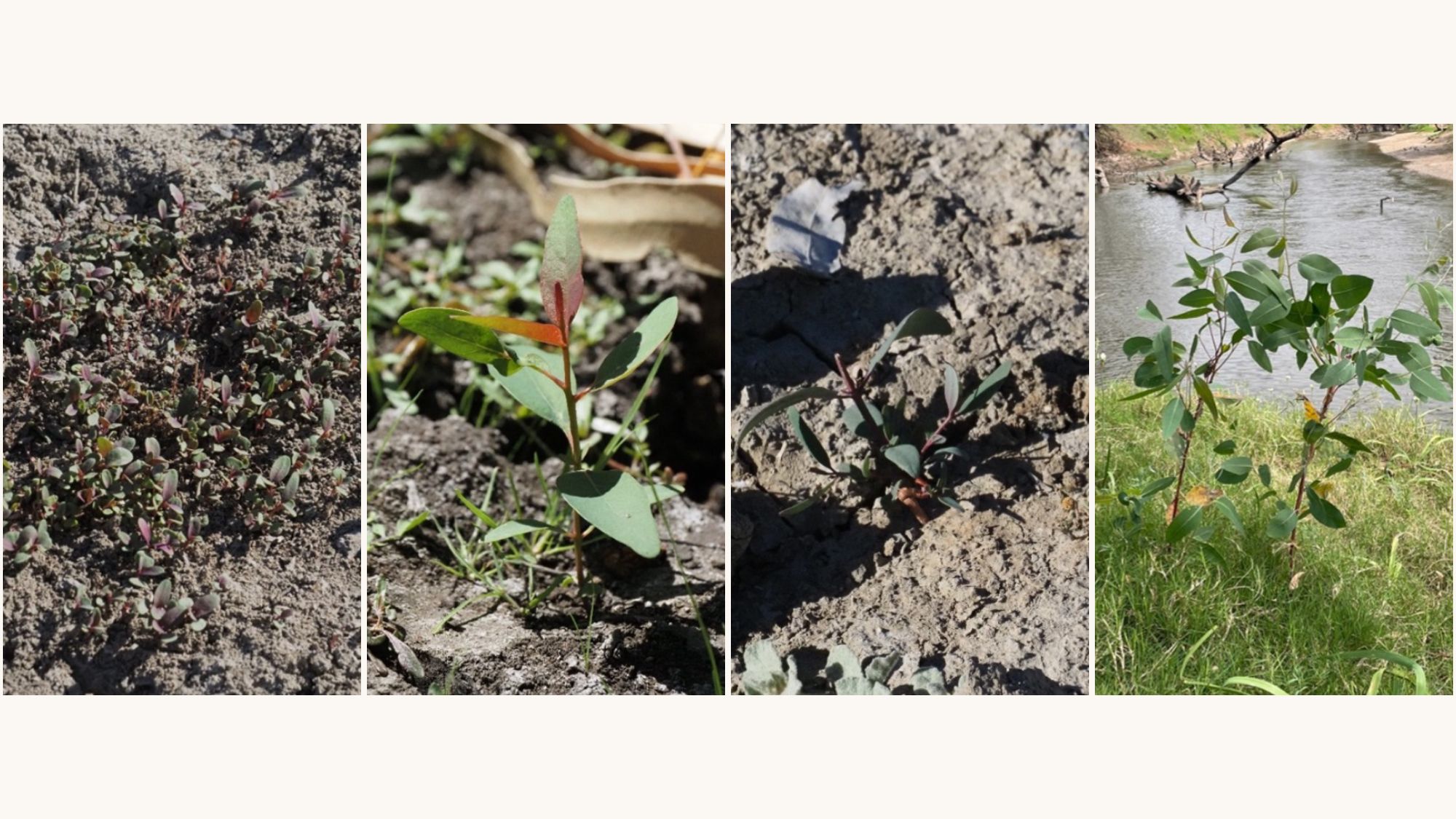
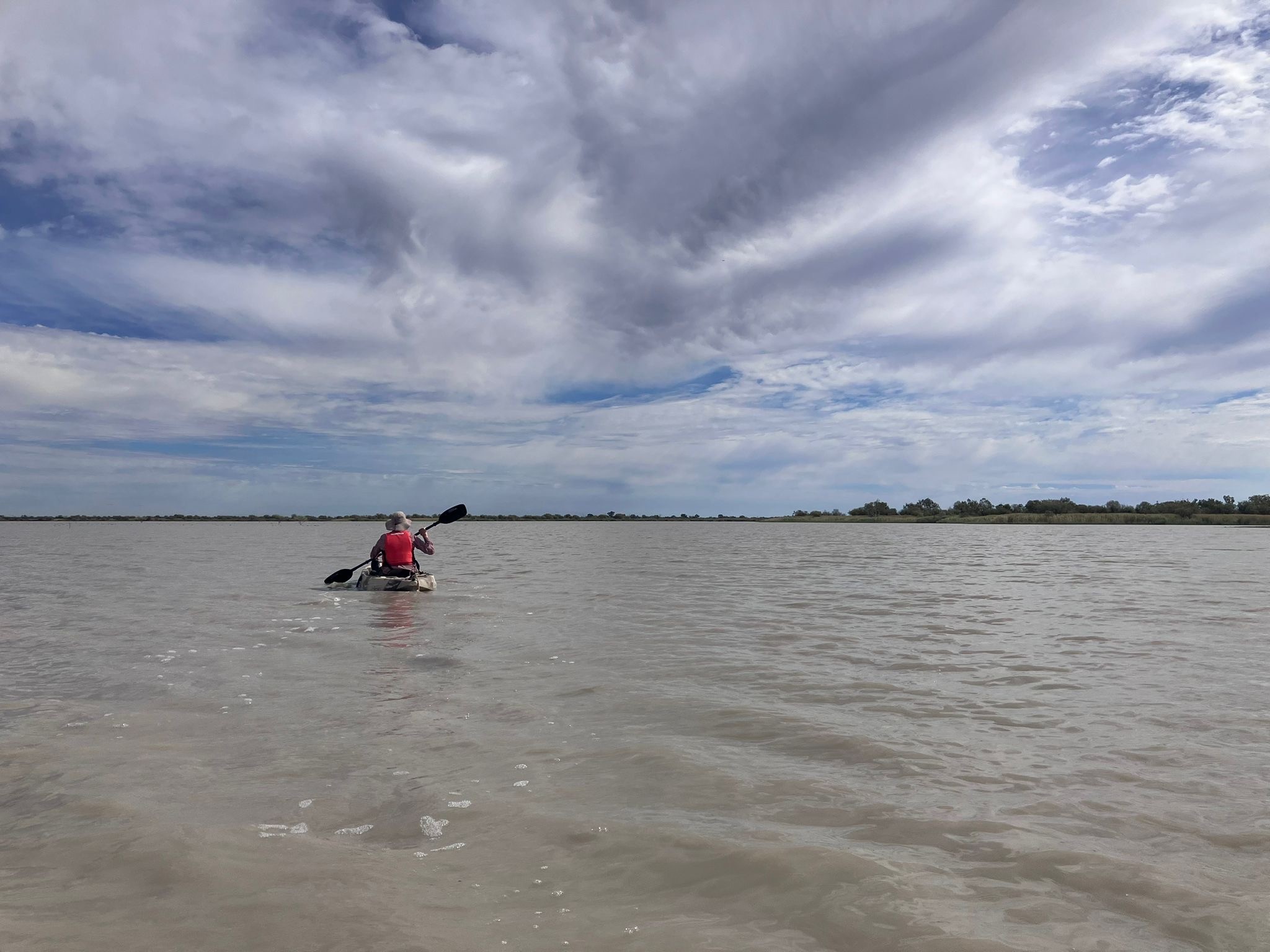
While conducting their spring vegetation monitoring, researchers found several patches of lignum shrubland that were brimming with life on the lower Namoi floodplain. Wet soils supported many aquatic and water dependent plant species, and several waterbird species were seen using this small patch, including ibis, spoonbills, heron, pelicans and cormorants. Lignum shrubs were vigorous and flowering, and seedlings of coolibah (Eucalyptus coolabah) were also seen.
While on-ground monitoring of lignum shrublands is not part of the Border, Barwon and Namoi River Systems Area-scale Project, satellite imagery is used to effectively monitor these important plant communities. Normalised Difference Vegetation Index (NDVI) is a combination of the red and near-infrared wavelengths of satellite images which can be used to show how green or vigorous the vegetation is in these important habitat areas.
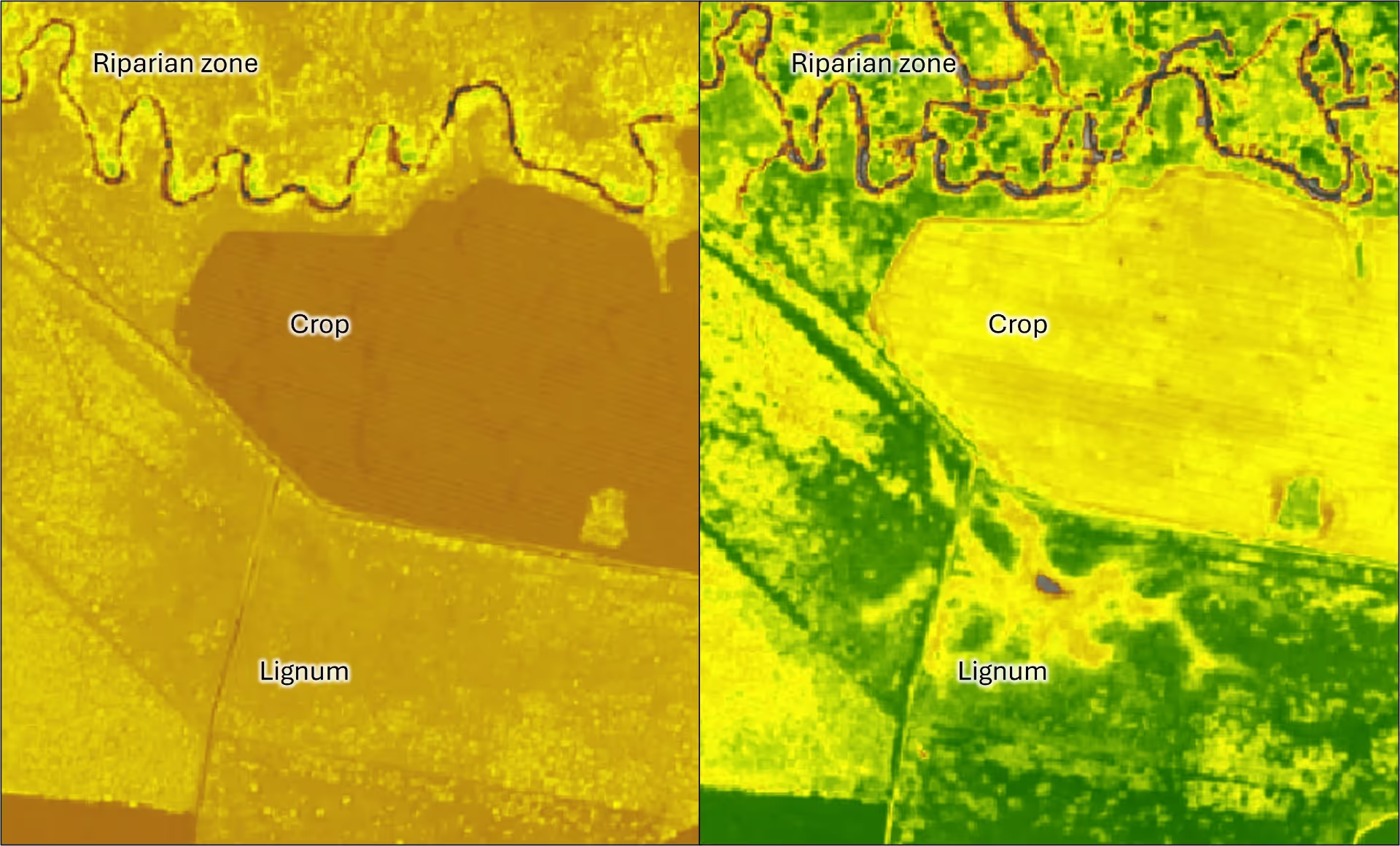
The presence of lignum shrublands on the Namoi floodplain highlights their persistence and contribution to sustaining biodiversity within the Murray–Darling Basin. By leveraging innovative monitoring techniques such as NDVI analysis, we can better understand and protect these invaluable habitats, ensuring waterbirds and other species continue to thrive.
%20shrubland%2C%20(photo%20credit-%20Rebekah%20Grieger).avif)

%20(1).jpg)