%20.avif)
River red gums (Eucalyptus camaldulensis) are iconic trees of the Murray–Darling Basin, well known as the giants towering over waterways for hundreds of years. They grow from tiny seeds (about 1 mm long) and provide vital habitat and food for birds, insects, bats, mammals, and reptiles. Their root structure also serves as habitat for fish, turtles, yabbies and other aquatic creatures.
.avif)
Researchers are concerned about the ongoing survival of river red gums, and other riparian tree species due to a lack of recorded seedlings, especially in the northern Basin. Seedlings typically thrive on open riverbanks which remain damp after floods.
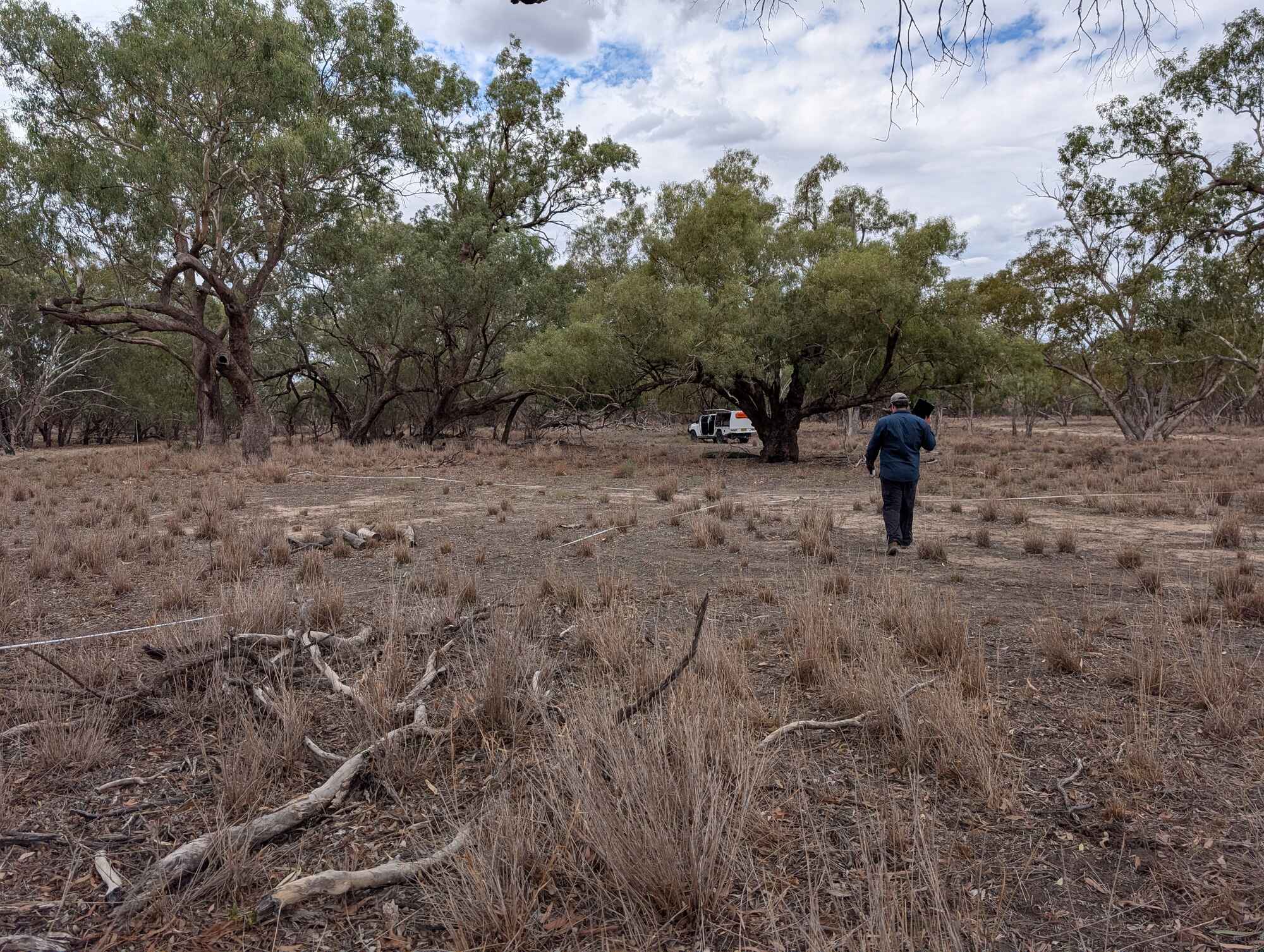
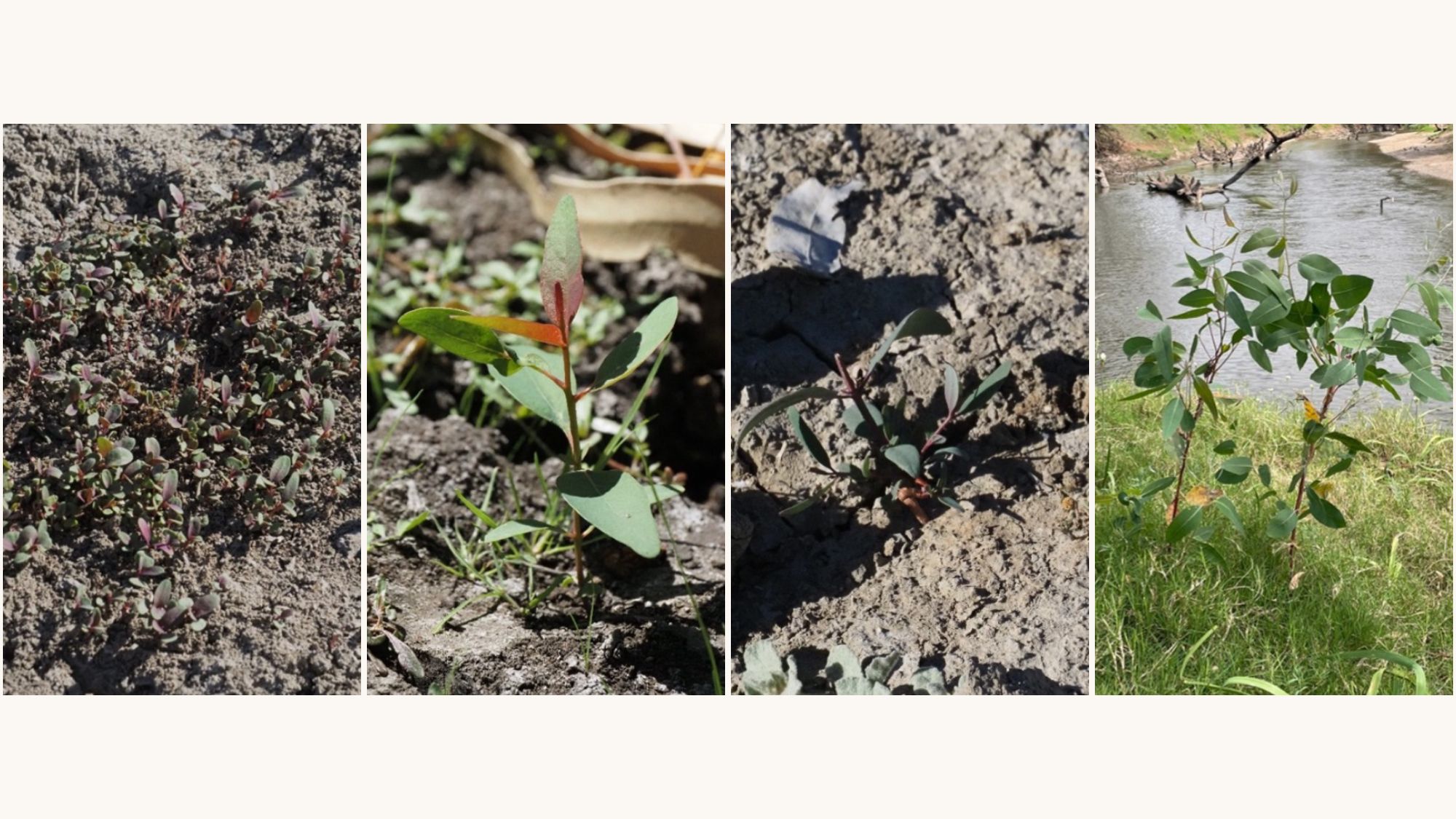
During their autumn 2025 survey of the Barwon River, researchers from the Border, Barwon and Namoi River Systems Area-scale Project, led by Griffith University, discovered hundreds of small river red gum seedlings which had likely sprouted in the past month. These seedlings were found at sites with large old river red gums that had received overbank flooding a month earlier, mostly along the Macintyre and Barwon rivers between Goondiwindi and Collarenebri.

.avif)
While many seedlings face challenges in their first year, including grazing by animals and competition for resources, some have the resilience to survive and grow. Floods that occur too close together can drown new seedlings or lack of water in the soil can dry them out.
Continued monitoring of these sites through the Flow-MER Program will allow us to track the seedlings and understand conditions which influence tree recruitment and seedling establishment.
.jpg)
High recruitment was observed at Little weir (approximately 100 seedlings) and Callandoon (60 seedlings) on the Macintyre and Barwon Rivers. All seedlings were very young, likely less than 1 month old. These small seedlings only occurred on the lower bank area which had recently been inundated and soils were damp.
Red gums along the Barwon River section were all much taller and larger in diameter than those in other sections.
River red gums are mass seeders i.e. they can reproduce in large amounts and can hold seeds in the canopy to be released and germinate when conditions are favourable.
%202(1).avif)
%203(1).avif)