

A resilient river system is one that can adapt and recover from disturbances associated with climatic extremes such as floods, fires and drought. In a river ecosystem, resilience is reflected in diverse and abundant plant communities, healthy populations of aquatic fauna and the availability of refuge options that animals can utilise during extreme events.
The Goulburn River, like many waterways across Australia, has experienced a sequence of extreme events in recent years. This has included major floods in 2022, followed by unseasonal overbank flows in January 2024. More recently, there have been issues from drying catchments with reducing inflows from tributaries and extensive bushfires in early 2026. These compounding pressures highlight the ongoing challenge of managing rivers in a highly variable and changing climate. Environmental water plays a critical role during periods of stress.
Post-flood recovery and the role of environmental water in rebuilding connection
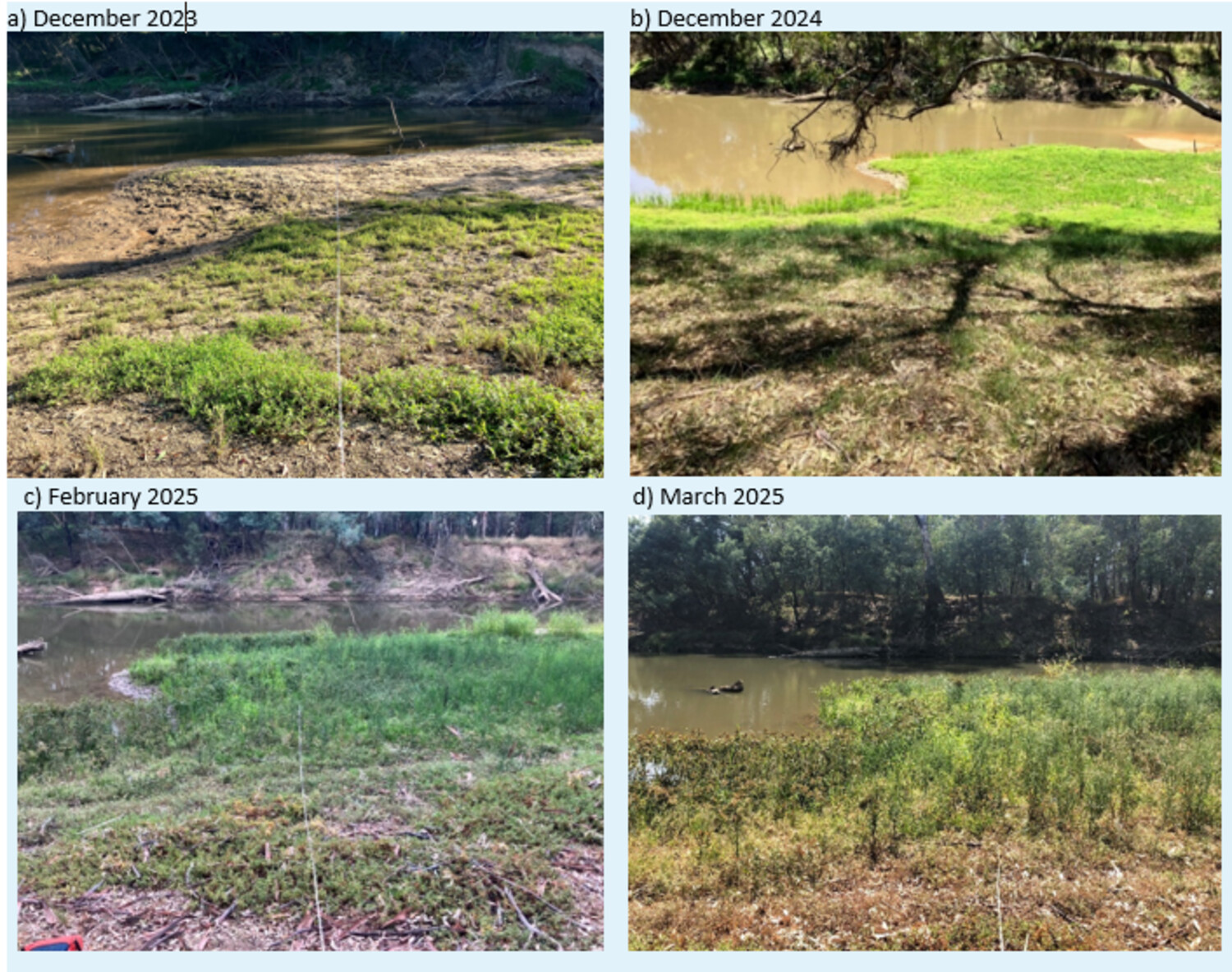
Riverbank vegetation was significantly impacted by multiple inundation events, particularly vegetation in the lower and littoral zones starting with the major October 2022 floods followed by multiple inundation events until early 2024. Flow-MER long-term monitoring detected measurable declines in vegetation cover and diversity following these events.
In response, a key focus of environmental water management in the Goulburn River has been supporting the recovery of riverbank vegetation. In the lower Goulburn, the most effective flow sequence for vegetation recovery is a spring fresh followed by low flows over summer. Environmental water deliveries in 2024 and 2025 were designed to provide this sequence, allowing vegetation to establish before the onset of higher-demand operational deliveries during summer and autumn, which has been exacerbated by ongoing widespread dry conditions.
In 2025 an Autumn fresh was also coordinated with operational flows. This collaborative approach enabled environmental and operational water to be delivered at the same time.
This avoided repeated inundation of lower bank vegetation while still providing sufficient flow to stimulate growth in the higher bank zones and enable seed dispersal. Early observations indicate vegetation is showing encouraging signs of recovery.
How drying conditions and bushfires increased vulnerability to water-quality risks
Prolonged hot and dry conditions increase stress on aquatic ecosystems, particularly for fish that depend on adequate dissolved oxygen levels. As water temperatures rise, dissolved oxygen availability declines, increasing the risk of hypoxic (low oxygen) conditions. Environmental water can help reduce this risk by maintaining flow and improving oxygenation.
Under dry conditions, organic matter and nutrients accumulate within the catchment and tributaries. When rainfall occurs, this material is rapidly washed into the river system, where its decomposition can further deplete oxygen levels and degrade water quality.
The Goulburn River’s vulnerability has been further heightened by the 2026 Longwood and Trawool bushfires, which burned approximately 140,000 hectares of catchment. Recovery is expected to take several years. In the interim, rainfall over fire-affected areas may generate runoff carrying ash, sediment and debris into the river, significantly impacting water quality and instream habitat.
Poor-quality inflow and how environmental water delivery reduced risk at a critical moment
In early March 2026, a significant rainfall event over fire-affected catchments resulted in poor-quality inflows entering the lower Goulburn River. Runoff containing sediment, ash and organic material led to a decline in water quality.
At the time, environmental water was already being delivered in the lower Goulburn River. These flows diluted the concentration of contaminants and helped maintain dissolved oxygen levels within a range suitable for aquatic life. As a result, the potential impact on fish and other aquatic fauna was minimised.
This event highlights the importance of having environmental water available and actively managed during high-risk periods. Strategic delivery at the right time can make a measurable difference in mitigating sudden ecological threats.

Proactive, adaptive management into the future
Recent events in the Goulburn River demonstrate that resilience is not a static condition, but one that must be actively supported through informed and adaptive management. Flow-MER monitoring has been critical in building the evidence base needed to understand how environmental water influences ecological responses to floods, droughts and fire-related impacts.
This knowledge is enabling a shift from reactive management to more proactive and strategic decision-making. By identifying the most effective flow patterns and understanding how ecosystems respond under different conditions, environmental water can be used to support recovery and reduce the impact of future disturbances.
Flow-MER will continue to track ecological condition and responses over time, including the long-term effects of the 2026 fires and continued drying conditions. This will allow managers to continue to refine delivery strategies, anticipate emerging risks and protect key ecological values such as riverbank vegetation, instream habitat and aquatic fauna.
As climate variability and extreme events become more frequent, this adaptive, evidence-based approach will be essential. Environmental water supported by robust monitoring, strong collaboration and a commitment to learning will remain central to building and sustaining resilience in the Goulburn River system.
.avif)
.jpg)