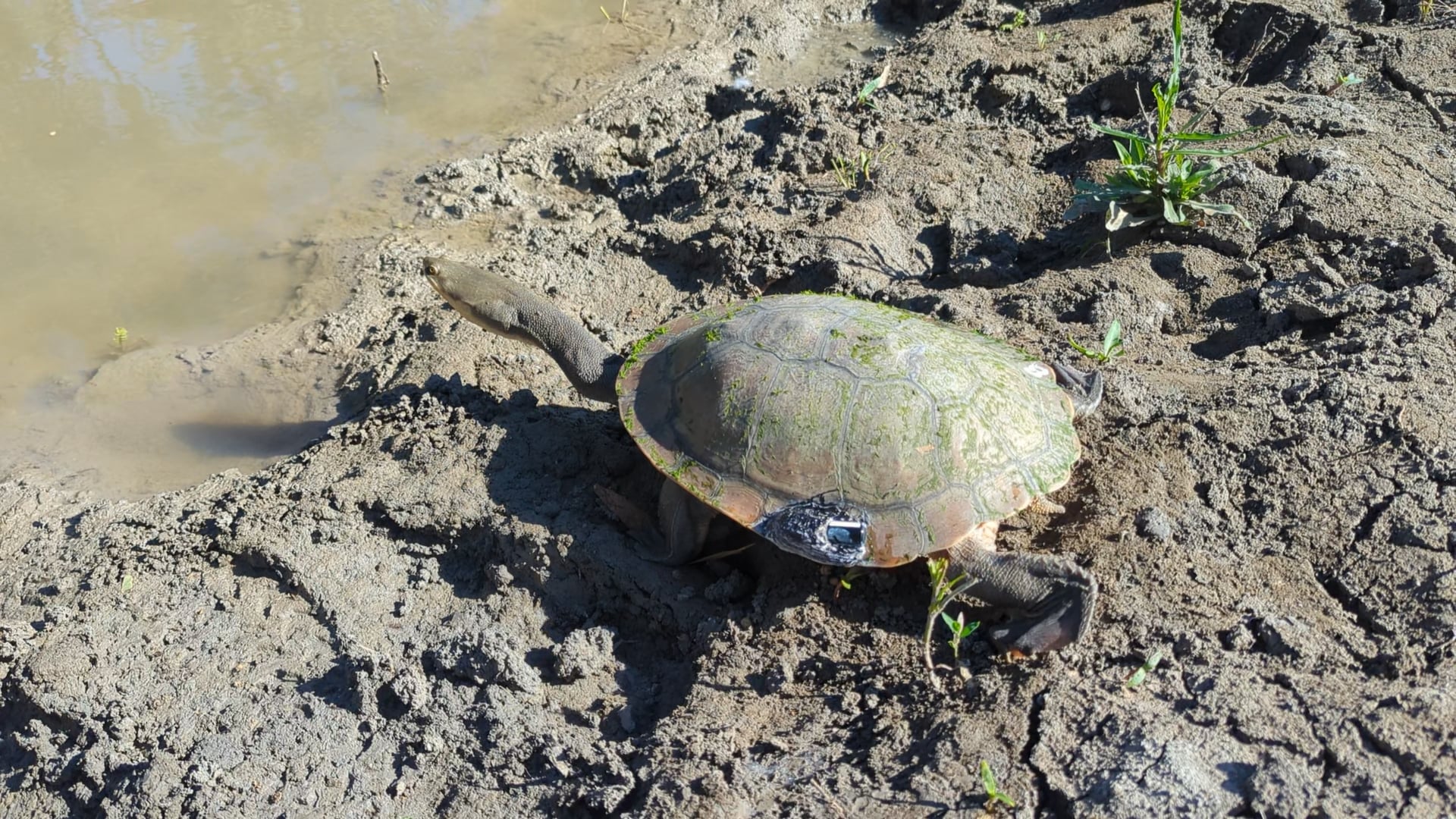
Early results from a turtle movement study in the Macquarie Marshes show that broad‑shelled turtles (Chelodina expansa) travel greater distances than eastern long‑necked turtles (Chelodina longicollis) in this important wetland.
The study is being carried out over two years by UNSW. Student William Hall has undertaken one year of the project as part of his honours project. Its goal is to find out whether turtles are moving in response to water flows. This information helps water managers decide where environmental water should be released.
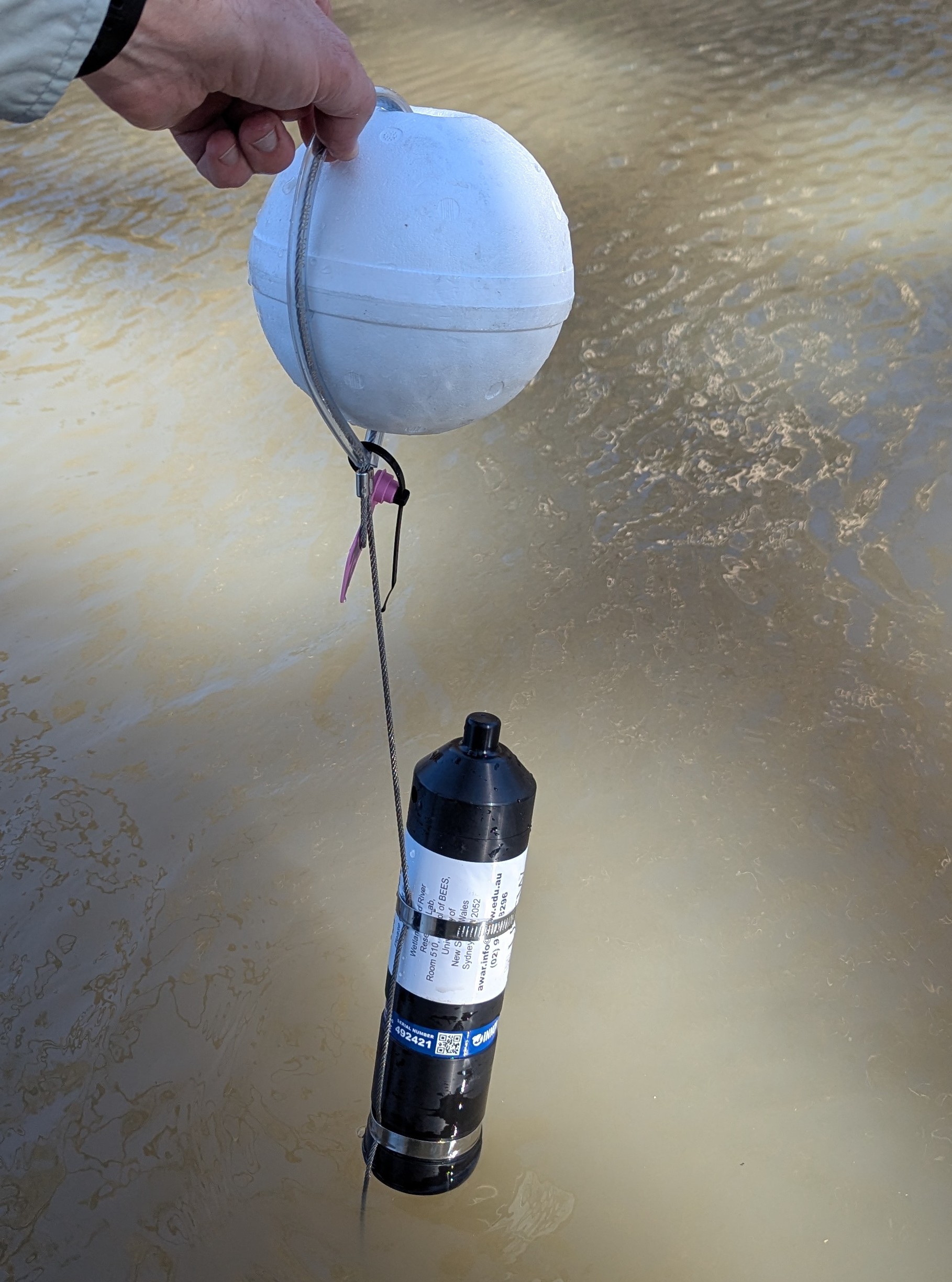
In October 2025, William and the Flow‑MER team attached tracking devices (acoustic tags) to the shells of 10 broad‑shelled turtles and 10 eastern long‑necked turtles. These tags sent signals to an existing network of receivers placed around the Marshes and recorded where the turtles were. The most recent data collection trip was completed in May 2026.
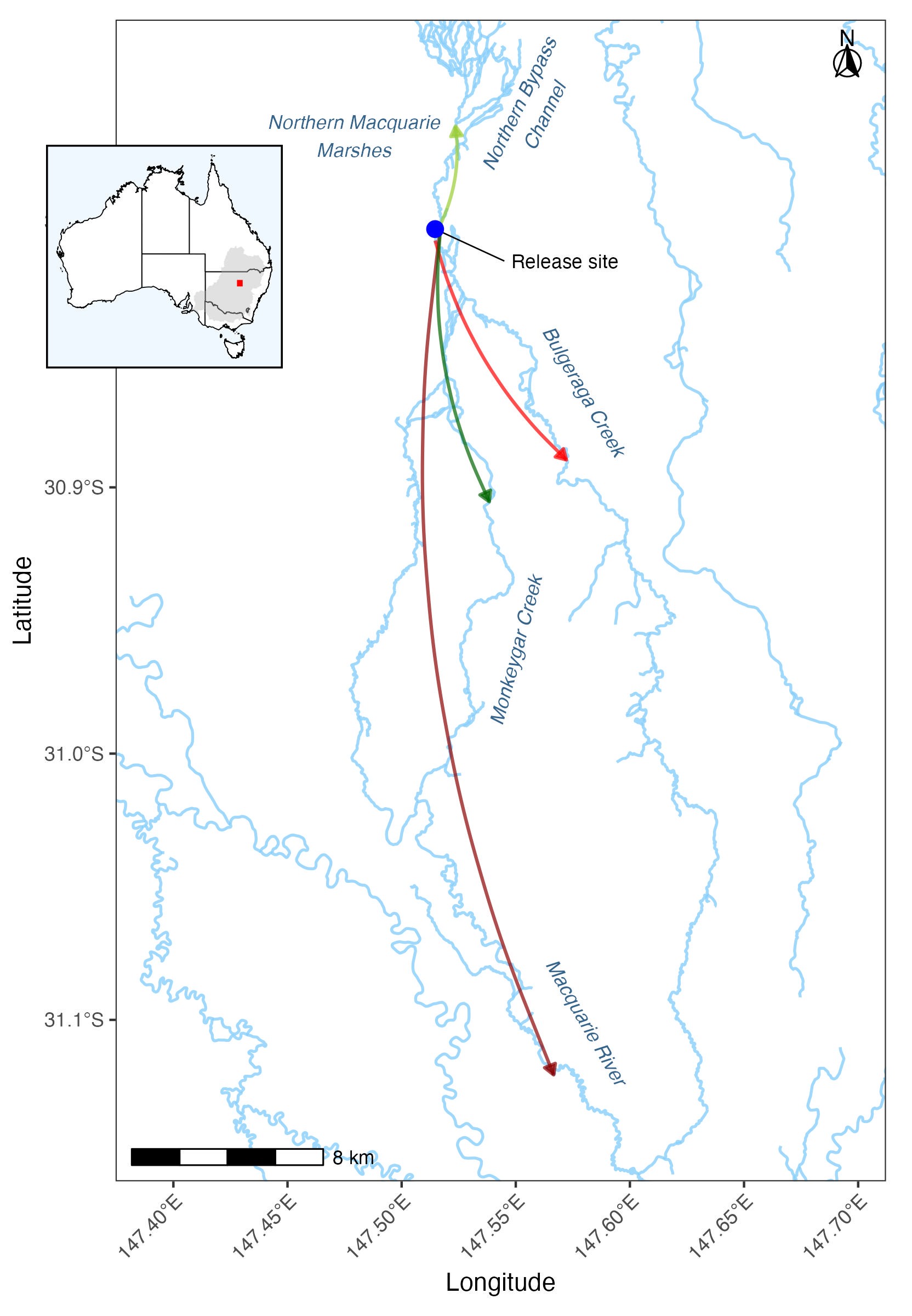
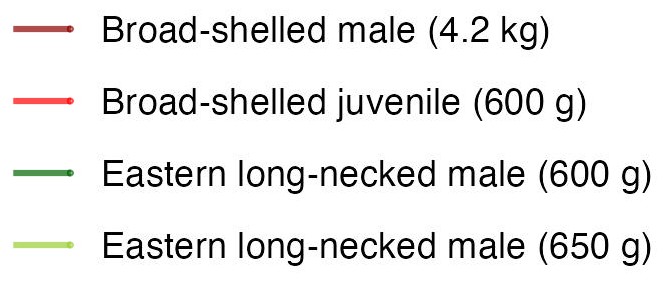
The results show one large male broad‑shelled turtle, weighing 4.2 kg, travelled a cumulative distance of 71 km in seven months and was eventually detected well upstream of its original capture and tagging location.
Even smaller broad-shelled turtles travelled far. A young turtle weighing 600 g managed to travel 64 km. This long distance was from many small trips (approximately 600m each), including a quick 10 km trip upstream before it returned to its preferred small section of the river.
In comparison, eastern long‑necked turtles were detected less often in the river. This is likely because they often travel over land and move into dams or other waterways outside the tracking system's range.
The longest recorded trip for an eastern long‑necked turtle was 16 km by a 600 g male, which moved upstream. Another turtle, weighing 650 g, travelled about 10 km. It went 5 km downstream into the northern Marsh before returning a month later.
Some turtles, of both species, stayed in the same part of the river for several months. They made short trips to explore but returned to the same area.
The turtles are still being tracked and will provide data on the next season of flows in 2026-2027.
The study is funded by Flow‑MER, NSW DCCEEW and UNSW.
.avif)