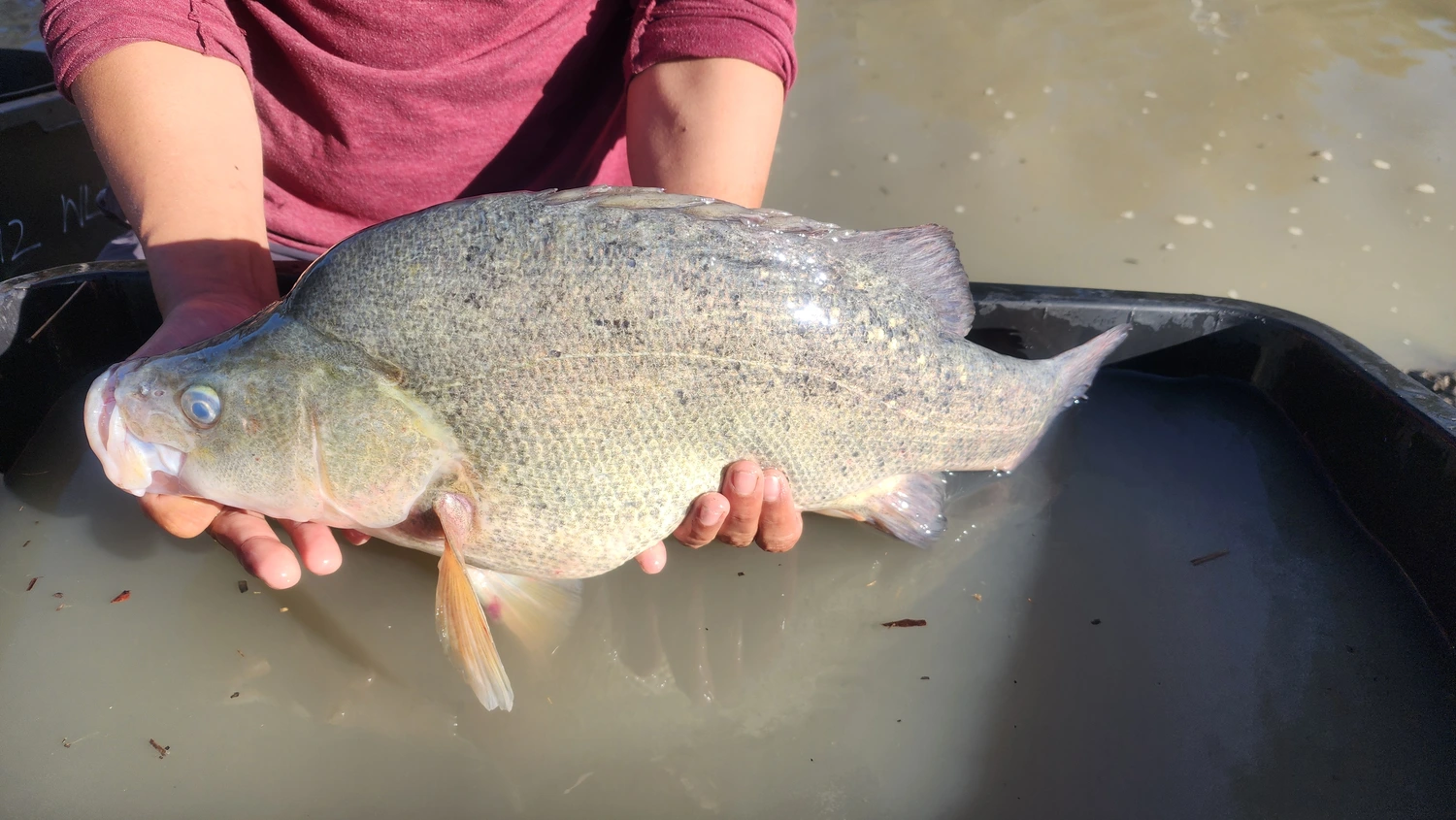
81 fish: Golden perch have been tagged in the Lowbidgee wetlands and creeks as part of a new tracking study.
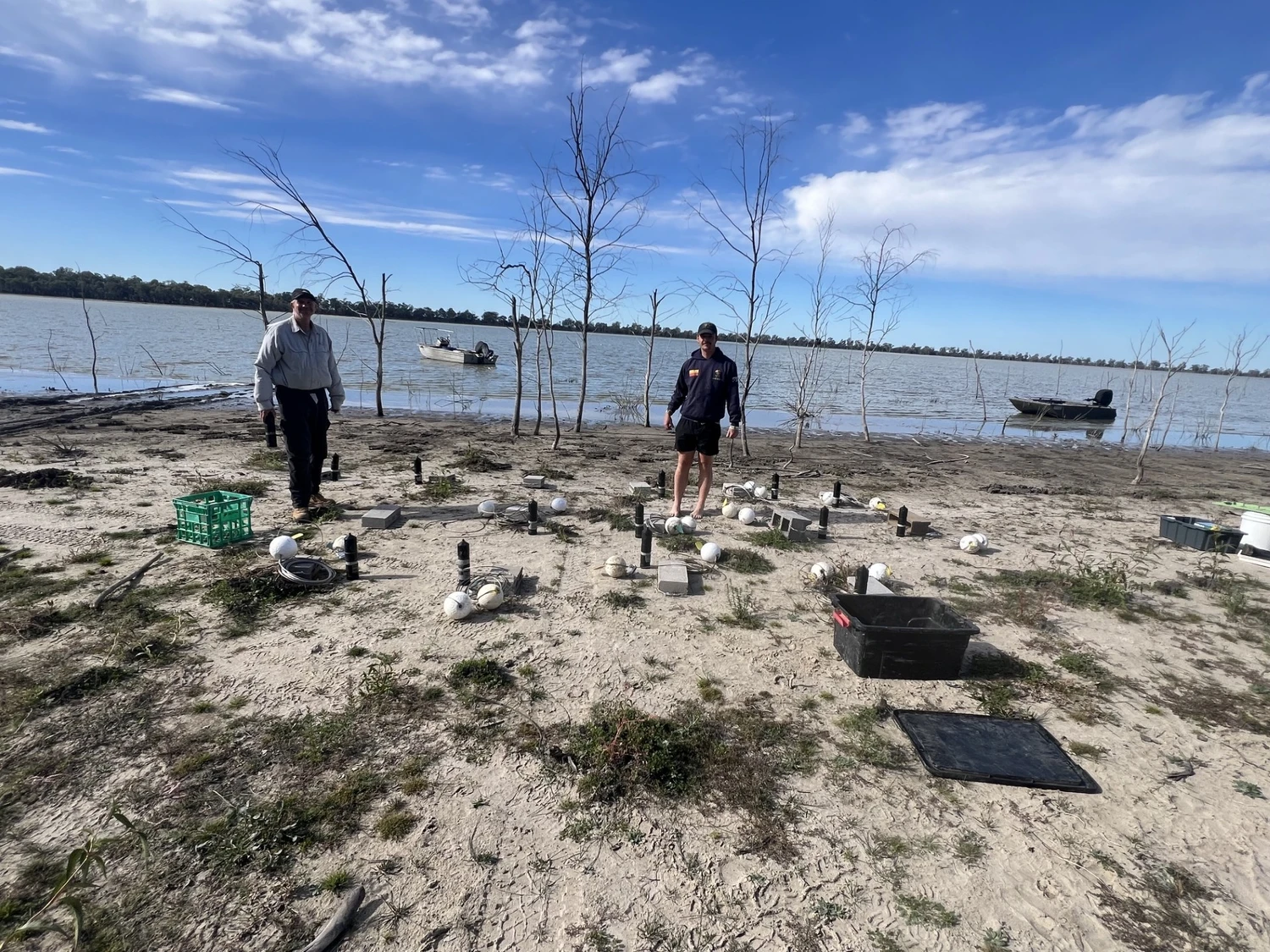
26 stations: Underwater listening stations have been set up at key locations across the floodplain and river.
2-4 years: Each tag will transmit a signal for up to four years, giving researchers long-term movement data.
What is this project about?
Golden perch are native freshwater fish found throughout the Murray–Darling Basin. They are considered a sign of a healthy river system. When golden perch populations are thriving, it usually means the river and its floodplains are in good shape.
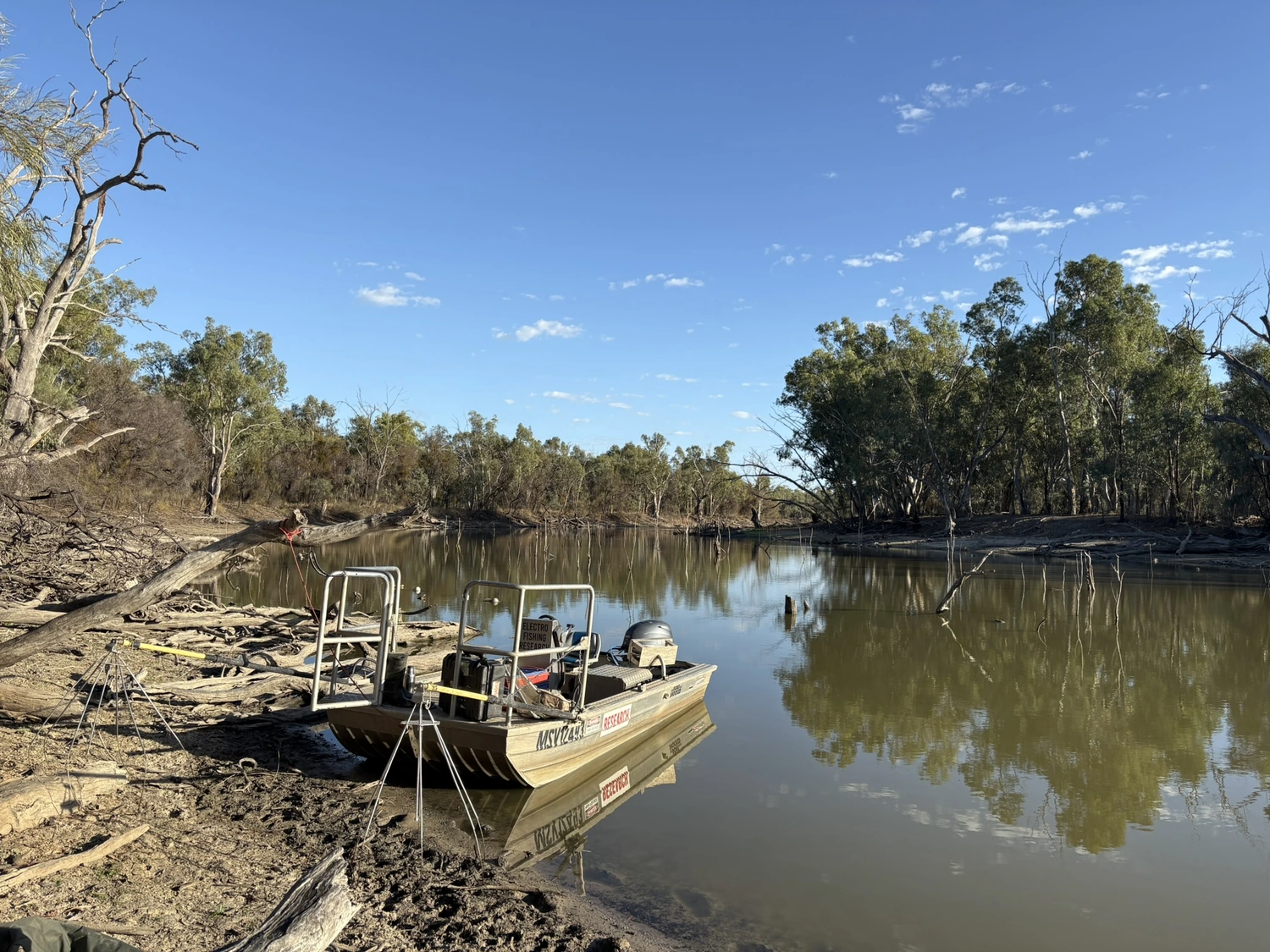
In the Lower Murrumbidgee (also known as the Lowbidgee), golden perch numbers are much lower than they should be and vary a lot from year to year. To understand why, environmental water managers from NSW DCCEEW and researchers from Charles Sturt University (CSU) have started tagging fish with small acoustic trackers and have deployed an array of ‘listening stations’ (loggers) to follow their movements through the wetlands, creeks, and river channels under various hydrological conditions.
The information gathered will help guide how water for the environment (released specifically to support nature) is managed in the region, so it delivers the greatest benefit for fish and other wildlife.
How are fish tagged?
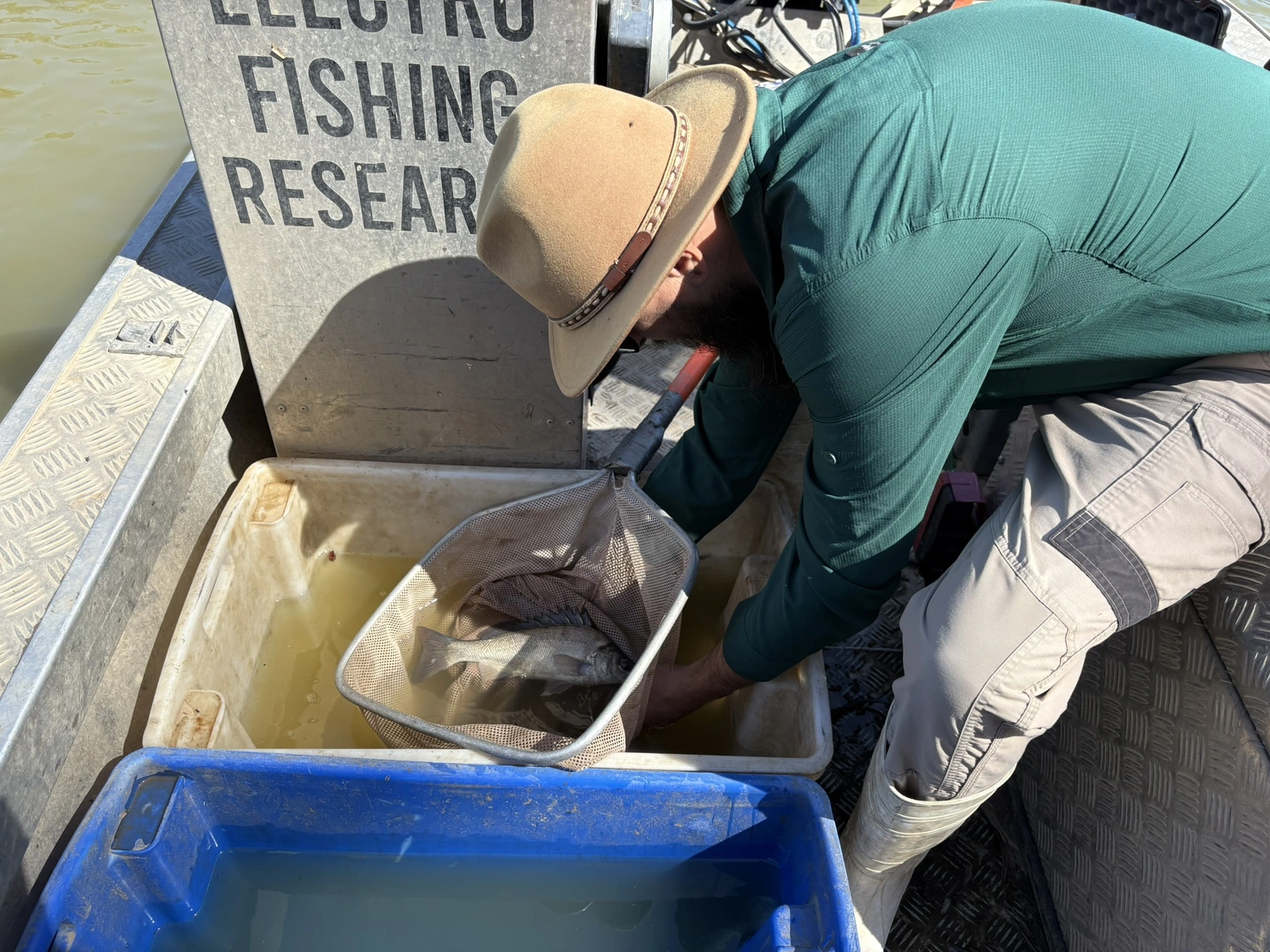
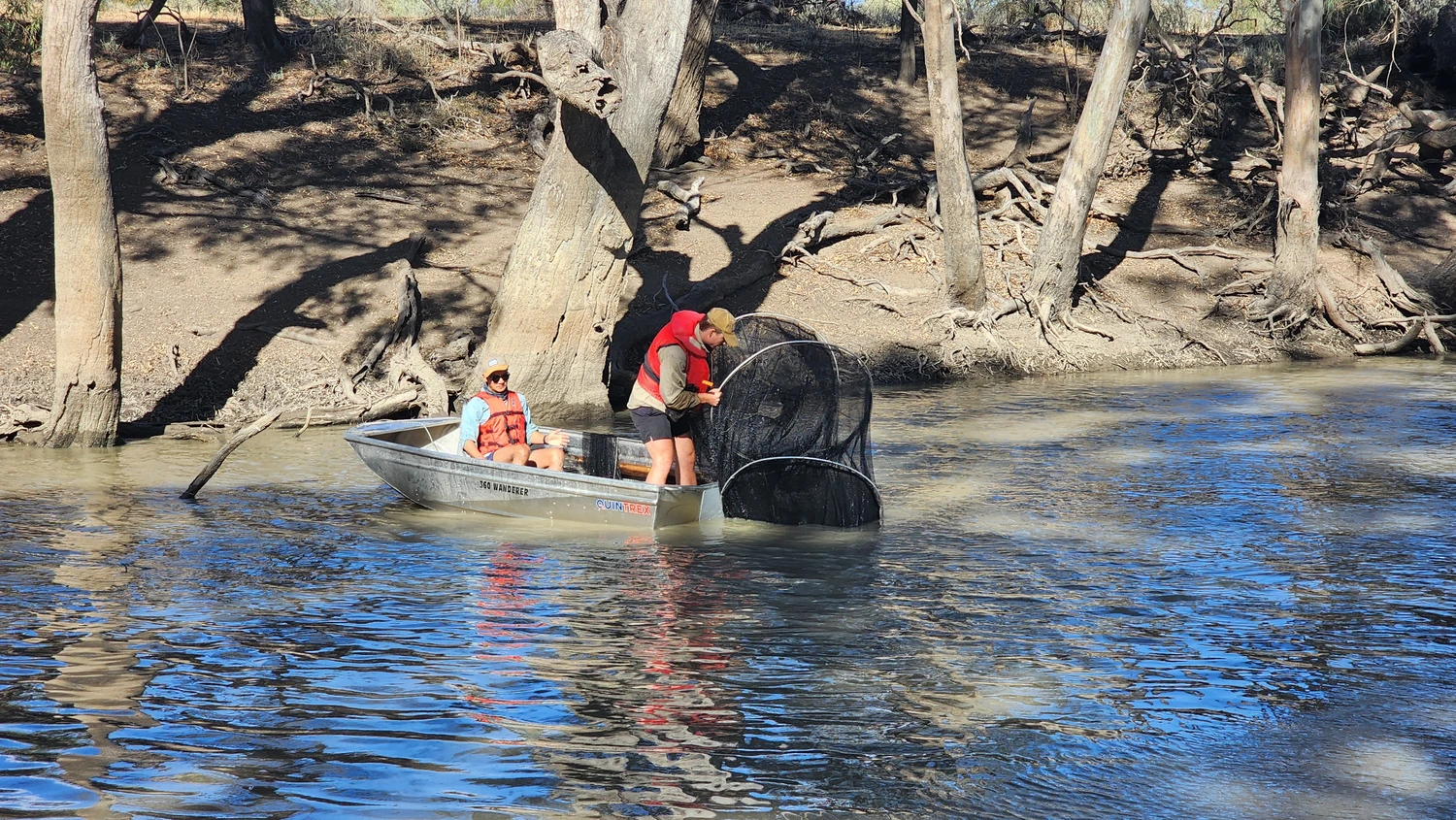
Fish are caught using two methods: electrofishing boats (which briefly stun fish so they can be safely collected) or fyke nets. Each fish is then brought to a temporary surgery set-up on the riverbank, where it is:
- Anaesthetised so it does not feel any discomfort
- Weighed and measured
- Given a small acoustic tag implanted into the abdomen through a tiny cut
- Stitched up and monitored while it recovers
- Released back at the same spot, the same day
The whole process takes about five minutes. Two tag sizes are used — a smaller one for juvenile fish that transmits for 1 year and a larger one for adults that lasts two years.
How does the tracking work?
Once tagged, each fish sends out a unique acoustic (sound) signal through the water. A network of 35 underwater listening stations (loggers), placed at strategic locations across the Lowbidgee, picks up these signals whenever a tagged fish swims nearby.
Adult and juvenile fish have been tagged in Yanga Lake, Tala Lake, Talpee Creek, and Tala Creek. These are wetland areas that serve as vital nursery habitats for young golden perch and off-river refuge sites for adults.
Why do golden perch need flowing water?
Golden perch depend on flowing water to complete their life cycle. They migrate long distances within freshwater and readily move between the main river and flooded wetlands. Floodplain habitats have been shown to be important nursery and recruitment zones, and our monitoring of the Lowbidgee has shown they are also significant spawning sites for resident golden perch.
Over many decades, dams, weirs, water diversions, and other infrastructure have altered water flows across the Murray–Darling Basin. These changes are thought to have made it harder for golden perch to migrate, spawn, and grow their populations.
Water for the environment can help restore some of these natural flows. However, researchers need to know exactly when, where and how much water is needed to be most effective.
What are researchers testing?
The study is exploring three possible explanations for how golden perch behave and move in the Lowbidgee:
- Flow Connect: All life stages move freely along the river and between the river and flooded wetlands when connected by flow. Spawning and recruitment occur across the entire river-floodplain network. This is closest to how the system would work without regulation and likely supports the most successful breeding and recruitment response, but is hard to achieve in a managed river.
- River Drift and floodplain recruitment: Fish mainly live in the main river channel and adults are triggered to spawn by pulses of flow. Their eggs and larvae drift onto the productive floodplain, which acts as a nursery. Young fish then return to the river when water reconnects.
- Floodplain Spawning recruitment and dispersal: A largely self-contained population lives year-round in the permanent creeks, wetlands and lakes of the floodplain. Water for the environment triggers movement and spawning within these creeks, with recruitment occurring on the floodplain and some fish dispersing back to the river when connected. The tracking data will reveal which of these patterns, or which combination, actually applies to the Lowbidgee’s golden perch population.
What happens next?
Data from the listening stations will be downloaded and analysed repeatedly for two years. The project team led by Dr Rex Conallin from NSW DCCEEW along with Dr Gordon O'Brien from the Gulbali Institute, Charles Sturt University will use the results to increase our understanding of the influence of environmental water delivery and other environmental variables on fish movements, particularly spawning movements of adults and dispersal of juveniles from floodplain nurseries back to the river to improve river populations.
This knowledge will directly inform decisions about when and where to release water for the environment in the Lowbidgee — giving golden perch and the broader floodplain ecosystem the best chance to recover and thrive.