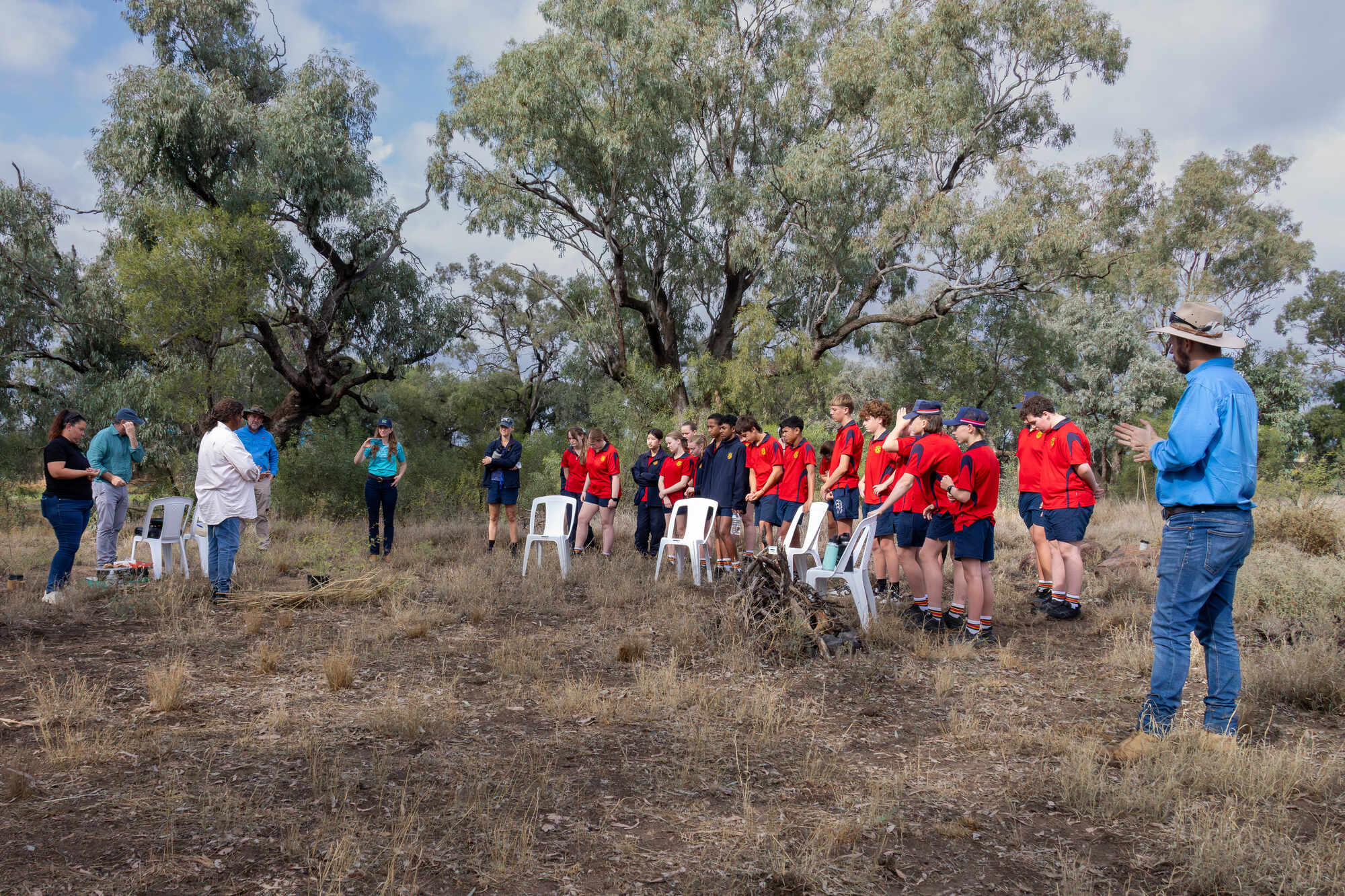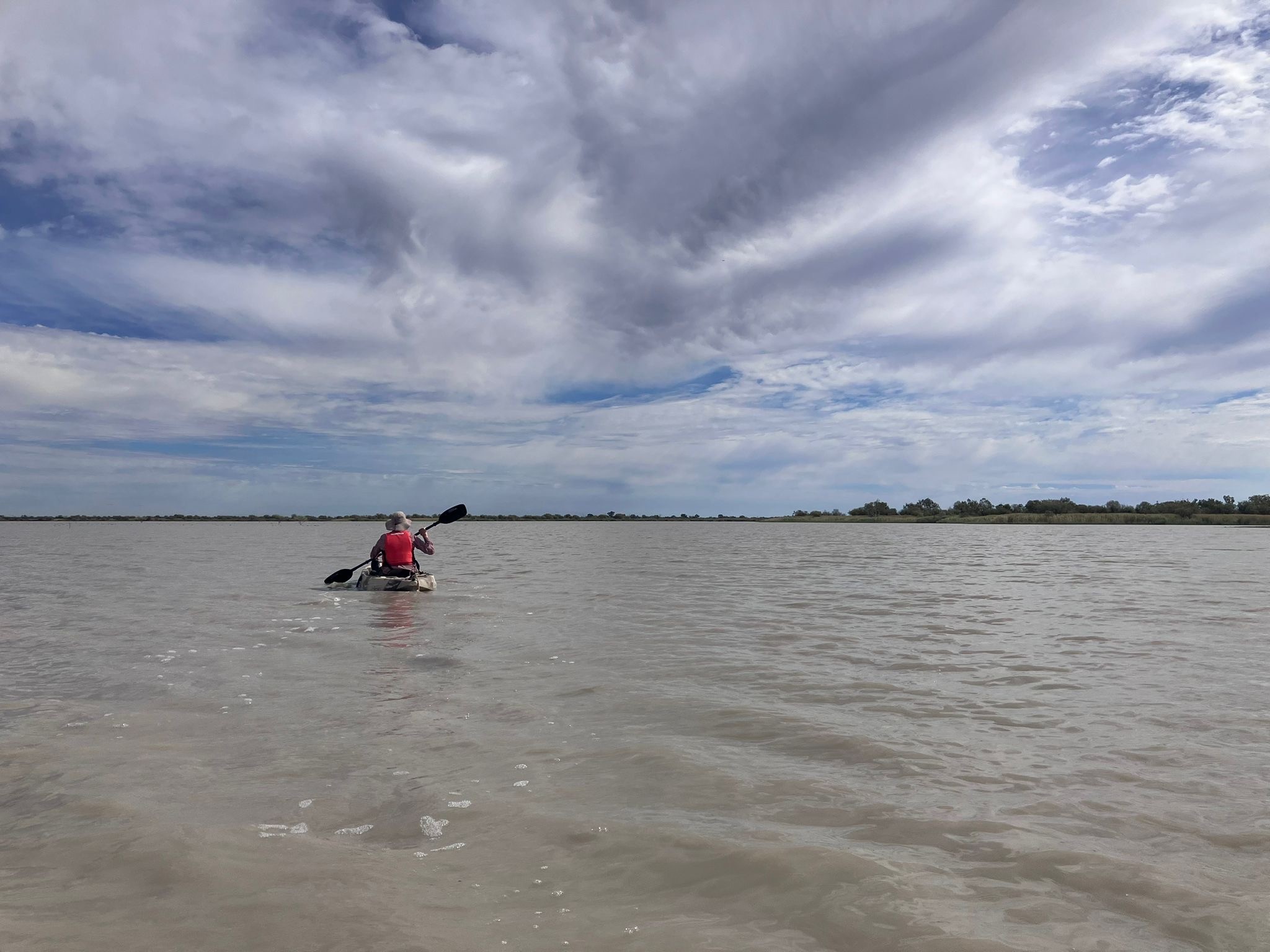
In mid-May, the NSW Department of Climate Change, Energy, the Environment and Water (DCCEEW), with help from the Dharriwaa Elders Group (DEG) River Rangers, carried out the final waterbird surveys at Narran Lake Nature Reserve for the 2025–2026 water year.
They recorded 23 waterbird species. This is compared to 32 species in August, 41 in December and three in February.
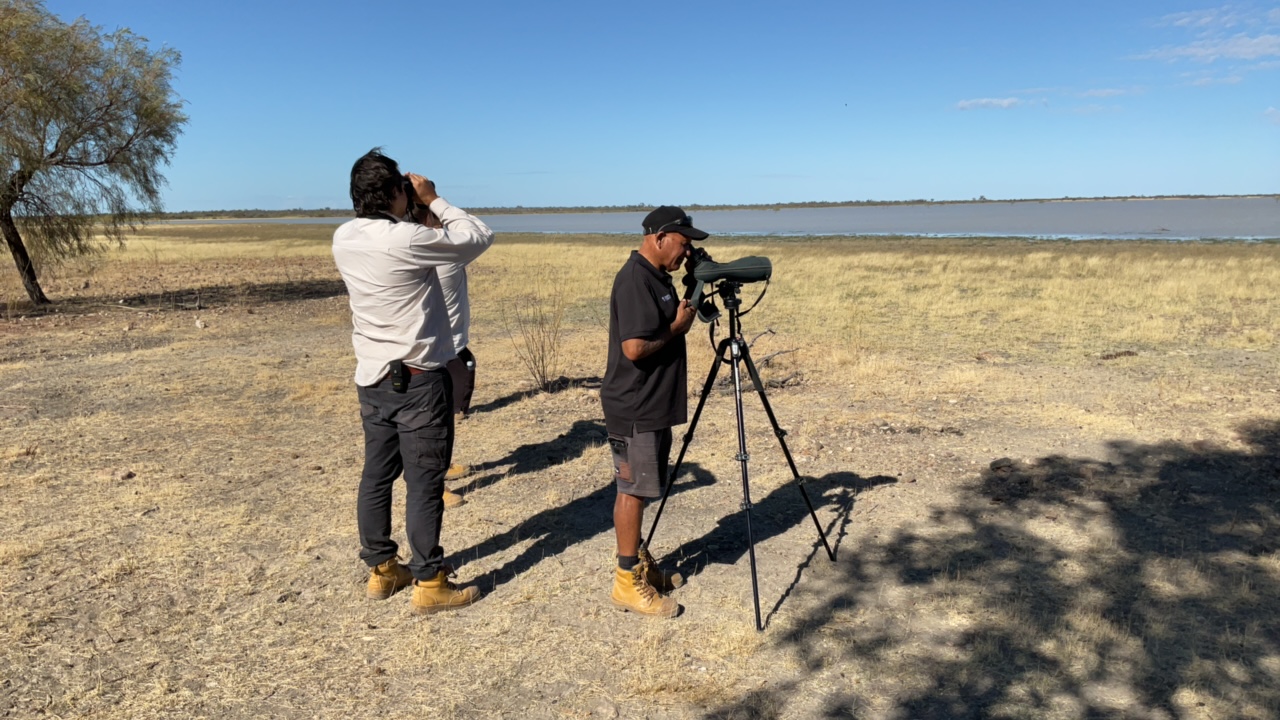
The species recorded in May included the white-bellied sea eagle (Haliaeetus leucogaster), which is listed as vulnerable in NSW. As well as several non-waterbird species listed as vulnerable in NSW, including the grey-crowned babbler (Pomatostomus temporalis), pink cockatoo (Cacatua leadbeateri), and white-fronted chat (Epthianura albifrons).
The most abundant waterbird species was grey teal (Anas gracilis), with about 2,500 birds counted on Clear Lake. Other large groups included around 100 Australian pelicans (Pelecanus conspicillatus), 100 black swans (Cygnus atratus), and 125 white-faced herons (Egretta novaehollandiae).
Most of the birds were found at Clear Lake and Back Lake, with very few seen at other survey locations in the reserve.
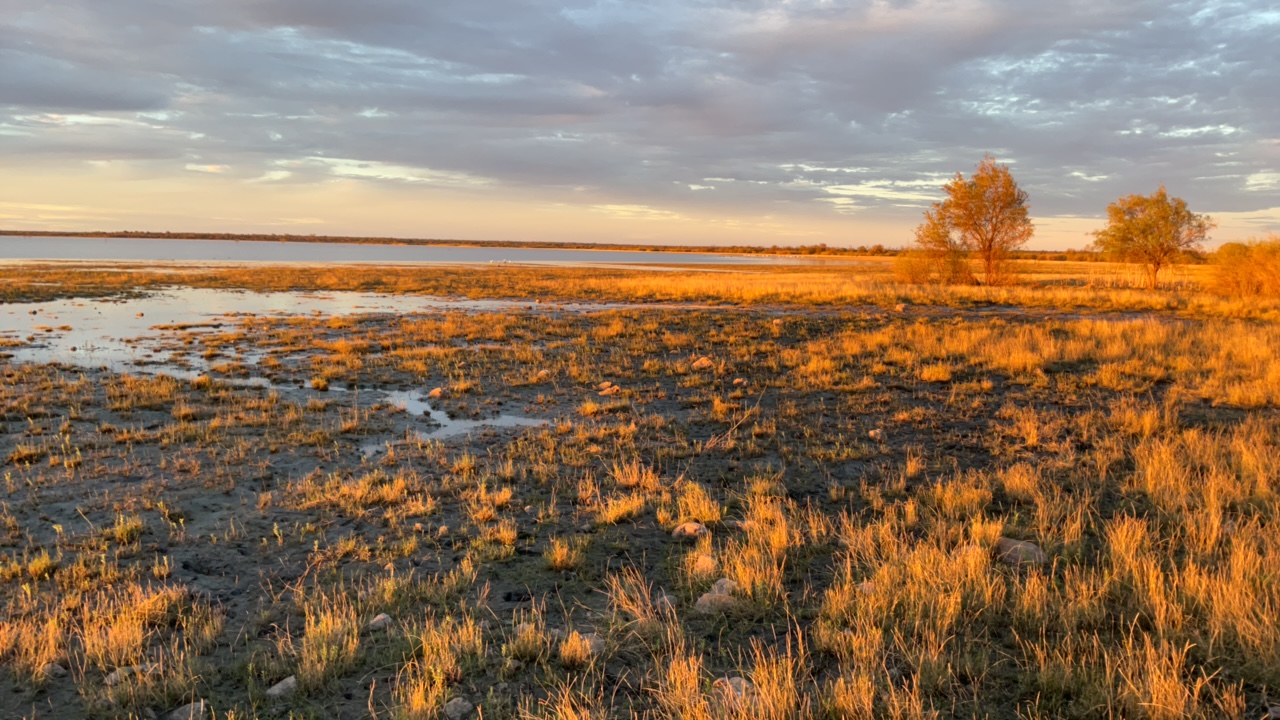
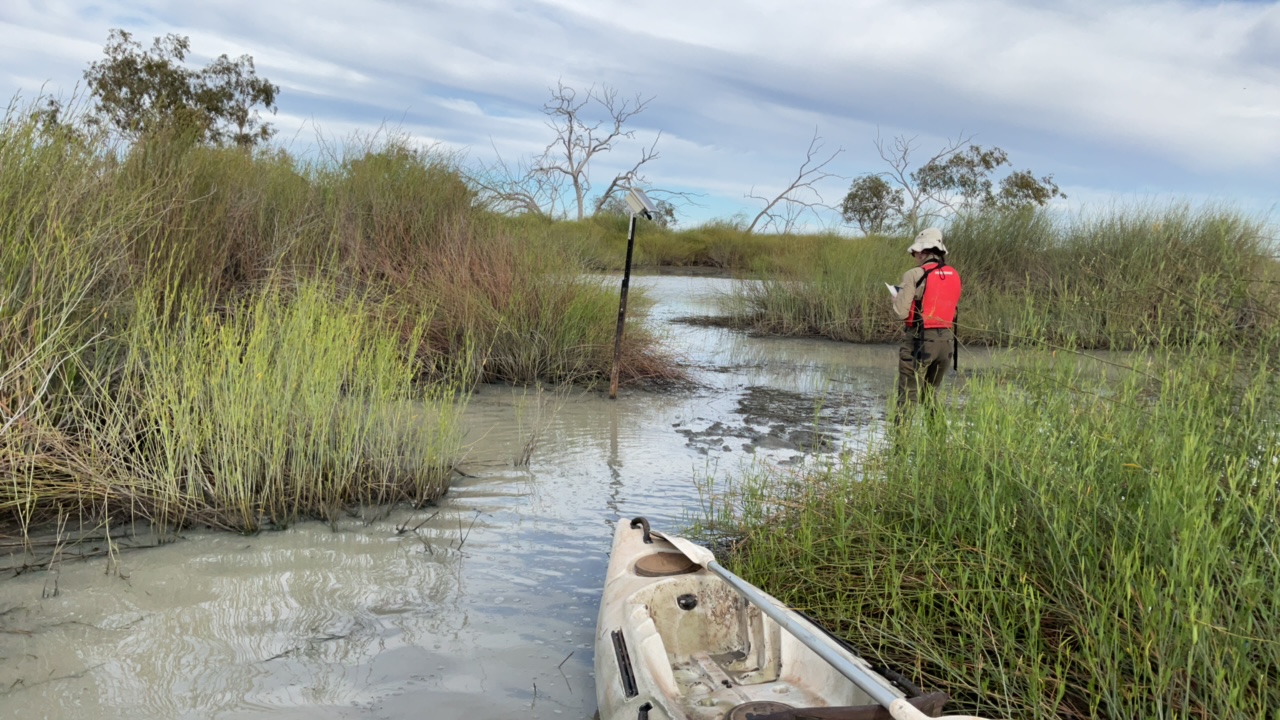
All survey sites except Long Arm were inundated at the time of the surveys. This was because water flowed into the lakes in late March and early April, filling them again after they had dried out between January and February. However, the water was still shallow, reaching a maximum depth of about 30 cm.
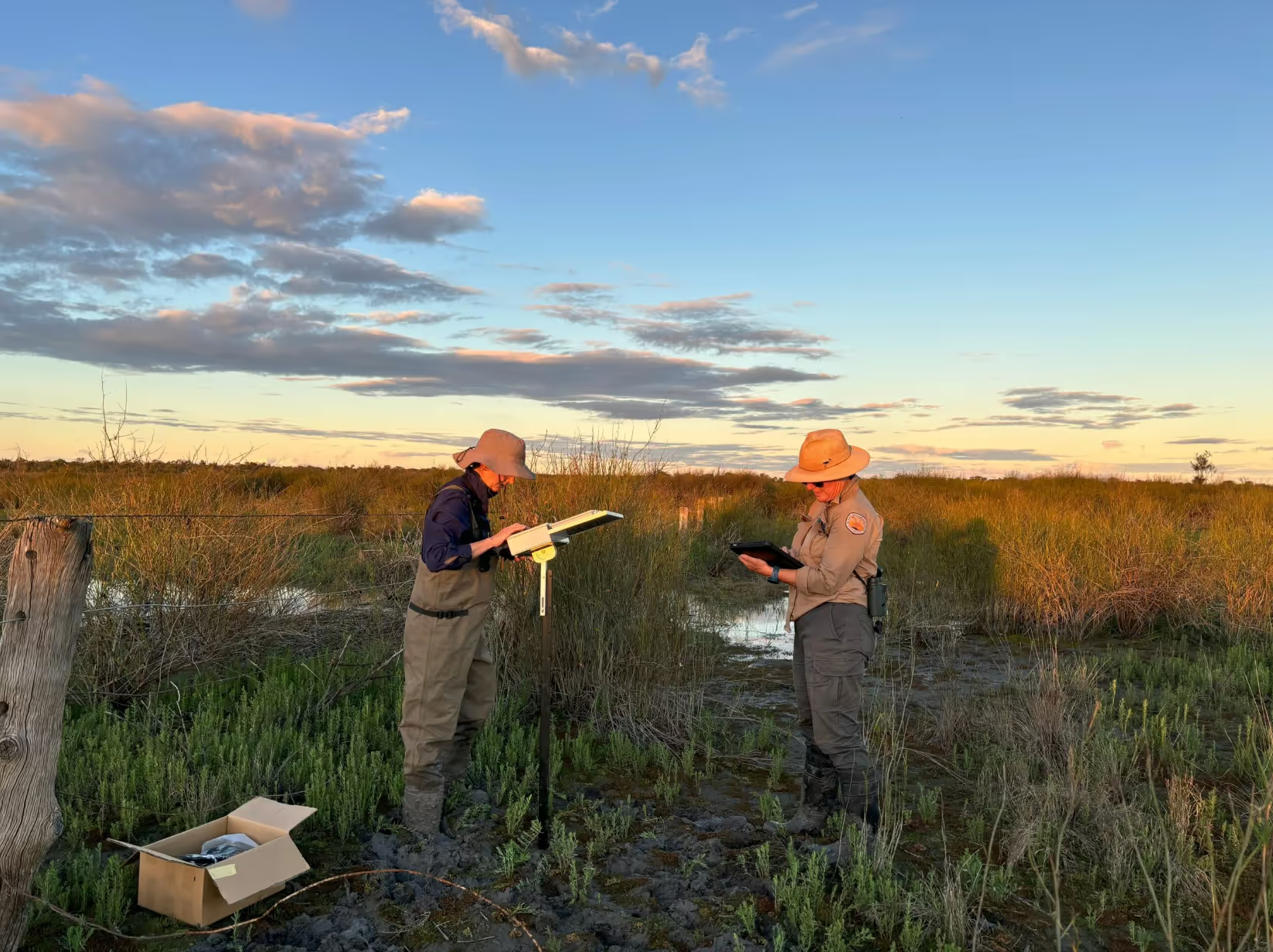
The team also collected sound recordings from fixed devices across the Nature Reserve. UNSW is now analysing these many hours of sound recordings using artificial intelligence (AI). They will also review a subset of recordings to confirm the accuracy of the AI analysis.
The results from the sound recordings, together with results from this year’s field surveys, will be used to prepare the second-year report for the Flow-MER waterbird monitoring project. The results will be shared later this year and will help guide decisions about water management.
Amphibian activity
Along with waterbirds, the team also saw large numbers of tadpoles in shallow water at Long Arm and Back Lake in the Narran Lake Nature Reserve.
The field team checked data from sound recorders placed around the Reserve. This showed high levels of frog calling in April after water flows had recently reached these areas.
Frogs are not currently monitored in regular Flow-MER surveys of the Narran Lake Nature Reserve. However, they are important indicators of wetland health. Frogs are important in the wetland food web, being both predators and food source as tadpoles and adult frogs.
Nearly half of the frog species in the floodplain wetlands of the Murray-Darling Basin breed when wetlands are filled by river flows. These frogs are called ‘flow-dependent’ species. Other frogs also use these habitats, but they usually breed in response to local rainfall rather than river flows.
%20(1).jpg)